 Signin

- 02 Jan 2026
- 0 Comment

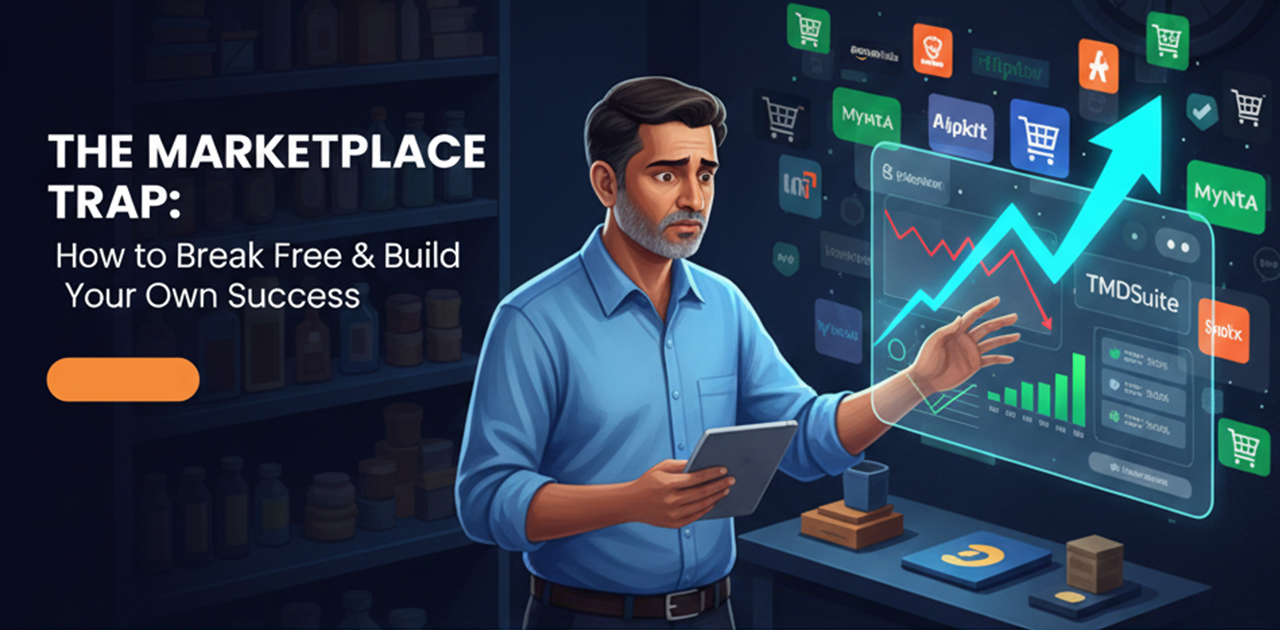
Why Marketplaces Like Amazon Are Not Enough for Retailers Anymore
Online marketplaces like Amazon and Flipkart have transformed the way products are bought and sold in India. They offer massive customer reach, built-in logistics, and quick onboarding for sellers. While these platforms are useful for visibility, relying only on marketplaces is no longer enough for long-term retail growth. Today, smart retailers are realizing the importance of owning their own online store alongside marketplace selling.
The Hidden Limitations of Online Marketplaces
Marketplaces are designed primarily for customers, not sellers. Retailers often face challenges such as:
- High commission fees that reduce profit margins
- Intense price competition with thousands of sellers
- Limited control over branding and customer experience
- Dependence on marketplace policies and algorithm changes
Over time, these factors make it difficult for retailers to build a sustainable and profitable business.
The Hidden Limitations of Online Marketplaces
One of the biggest drawbacks of selling on marketplaces is the lack of customer ownership. Retailers do not have direct access to customer contact details or buying behavior. This prevents sellers from:
- Building long-term customer relationships
- Running personalized marketing campaigns
- Creating loyalty programs
Without customer data, retailers remain dependent on the marketplace for repeat sales.
Branding Gets Lost in Marketplaces
On platforms like Amazon, every product page looks similar. Retailers struggle to differentiate their brand because:
- Product listings follow standard templates
- Customers remember the marketplace, not the seller
- Brand identity and storytelling are limited
This makes it hard for retailers to build brand trust and recognition over time.
Why Retailers Need Their Own Online Store
Owning an online store gives retailers full control over pricing, branding, customer experience, and data. With a dedicated online store, retailers can:
- Set their own pricing and promotions
- Showcase their brand identity
- Collect customer data for future marketing
- Offer exclusive deals and loyalty rewards
An own online store helps retailers shift from transactional selling to relationship-driven growth.
How TMDSuite Solves This Problem for Retailers
TMDSuite provides retailers with a ready-to-use online store integrated with a powerful POS and inventory management system. It allows retailers to sell online without technical complexity or high development costs.
With TMDSuite, retailers get:
- Pre-built online store with domain support
- POS and inventory sync, ensuring accurate stock levels
- GST-compliant billing for Indian businesses
- Multiple payment modes, including UPI and wallets
- Order, return, and customer management from one dashboard
This makes it easy for retailers to manage both marketplace sales and their own store efficiently.
Marketplaces + Own Store: The Smart Strategy
The future of retail is not about choosing between marketplaces and own online stores. Instead, it’s about using marketplaces for discovery and your own store for growth. Retailers can:
- Attract new customers via marketplaces
- Redirect repeat customers to their own store
- Increase margins by avoiding marketplace commissions
- Build long-term customer loyalty
TMDSuite enables this hybrid approach by keeping all operations centralized.
Gaining Control with Data and Reports
Unlike marketplaces, TMDSuite gives retailers access to detailed sales, inventory, and customer reports. These insights help retailers:
- Identify best-selling products
- Plan inventory more effectively
- Reduce wastage and dead stock
- Make data-driven business decisions
Data ownership is a key advantage in today’s competitive retail environment.
Marketplaces like Amazon are powerful, but they are not enough for retailers who want sustainable growth and brand independence. Relying only on marketplaces limits control, profits, and customer relationships.
With TMDSuite, retailers can build their own online store, gain full control over their business, and grow beyond marketplace dependency. In today’s digital retail era, owning your online store is no longer optional—it’s essential.
